
What Changes Happen in the Third Month of Pregnancy? Symptoms, Baby’s Development & Care
The third month of pregnancy is an important stage because it marks the final part of the first trimester. This month generally covers weeks 9 through 12 of pregnancy.
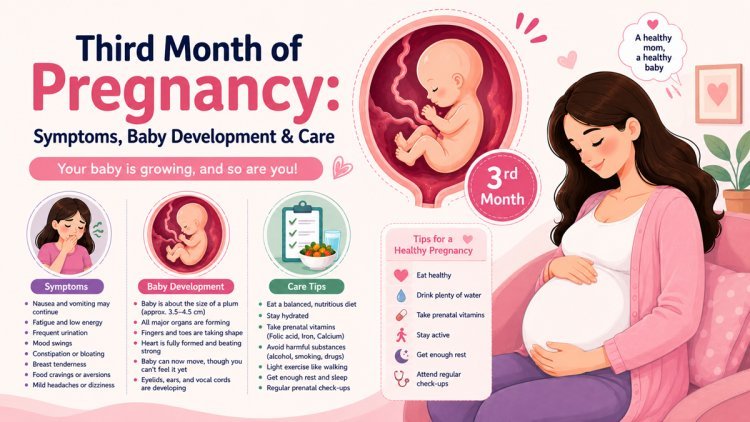
During this time, many early pregnancy symptoms may continue, including nausea, vomiting, tiredness, breast tenderness, frequent urination, bloating, changes in taste and smell, and mood changes. For some women, these symptoms may begin to improve toward the end of the first trimester.
At the same time, the baby continues to develop rapidly. The face, arms, legs, fingers, internal organs, and skeletal structures become more developed during these weeks.
By around week 12, the developing baby may measure approximately 5.4 centimeters in length.
In this article, we’ll discuss the third month of pregnancy symptoms, changes in the mother’s body, baby development, baby size, belly changes, foods to eat and avoid, pregnancy care, warning signs, and frequently asked questions.
What Does the Third Month of Pregnancy Mean?
The third month of pregnancy generally includes weeks 9, 10, 11, and 12.
These weeks are part of the first trimester. By the end of this period, many women begin moving toward the second trimester, and some early pregnancy symptoms may gradually become less intense.
However, every pregnancy is different. Some women may continue to experience nausea, tiredness, or other symptoms beyond the first trimester.
What Happens During Each Week of the Third Month?
Week 9: Rapid Baby Development
During week 9, the developing baby continues to grow quickly.
The baby's face becomes more defined, while the eyes, mouth, and tongue continue developing. The arms and legs also continue developing, and important internal organs continue to grow.
At this stage, the baby may measure around 22 millimeters, approximately the size of a strawberry.
The mother may continue to experience nausea, extreme tiredness, breast tenderness, frequent urination, and mood changes.
Week 10: More Noticeable Development
During week 10, the uterus continues to grow as the pregnancy progresses.
Some women may experience bloating, indigestion, gas, or heartburn.
The baby continues to grow rapidly, and facial features become more defined. The ears, nose, mouth, and other facial structures continue developing.
The baby's movements may also be visible during an ultrasound, although the mother cannot normally feel them yet.
Week 11: Arms, Legs, Fingers and Toes Develop Further
By week 11, the baby's arms and legs become more defined.
The fingers and toes begin separating, and the ears and early nail structures continue developing.
The baby may measure around 41 millimeters, approximately the size of a fig.
The baby may move and kick at this stage, but the movements are usually too small for the mother to feel.
The mother's blood circulation also changes during pregnancy, and some women may feel warmer than usual or occasionally experience dizziness.
Week 12: Approaching the End of the First Trimester
By week 12, the baby may measure approximately 5.4 centimeters, about the size of a plum.
The baby's internal organs and muscles continue developing, and parts of the skeleton begin to harden.
The baby's heartbeat may also be visible on an ultrasound.
For some women, nausea and other early pregnancy symptoms may begin to improve around this stage, although this does not happen for everyone.
Common Symptoms During the Third Month of Pregnancy
Pregnancy symptoms can vary from one woman to another. Some women may experience several symptoms, while others may have only mild symptoms.
1. Nausea and Vomiting
Nausea and vomiting can continue during the third month of pregnancy.
Although it is commonly called morning sickness, nausea can happen at any time of the day or night.
For many women, nausea gradually improves toward the end of the first trimester.
However, severe vomiting should not be ignored. If you cannot keep food or fluids down, contact a healthcare professional.
2. Extreme Tiredness
Fatigue is very common during the first trimester.
Hormonal changes and the physical demands of pregnancy can make you feel unusually tired.
Try to:
- Get enough sleep
- Take regular breaks
- Avoid unnecessary physical strain
- Eat nutritious meals
- Stay hydrated
3. Breast Tenderness
Breasts may continue to feel:
- Tender
- Swollen
- Heavy
- Sensitive
- Painful to touch
Hormonal changes may also make the nipples more sensitive and cause changes in their color.
4. Frequent Urination
Frequent urination can continue during the third month.
You may need to use the bathroom more often than usual, including during the night.
This can be a normal part of early pregnancy.
5. Changes in Taste and Smell
Pregnancy can change your sense of taste and smell.
You may suddenly dislike certain foods or become sensitive to cooking smells.
Some women experience a metallic taste in their mouth.
Food cravings and food aversions can also occur.
6. Bloating and Digestive Problems
Bloating, gas, indigestion, and heartburn can occur during the third month.
Hormonal changes can affect digestion and cause the digestive system to work more slowly.
Eating smaller meals, eating slowly, and avoiding foods that trigger discomfort may help.
7. Constipation
Hormonal changes during pregnancy can slow digestion and contribute to constipation.
Drinking enough water, eating fiber-rich foods, and staying appropriately active may help.
If constipation becomes severe or persistent, talk to your healthcare professional.
8. Dizziness
Some women may experience dizziness during pregnancy.
Changes in hormones and blood circulation can contribute to this feeling.
If you feel dizzy, sit or lie down and rest until you feel better.
Frequent or severe dizziness should be discussed with a healthcare professional.
9. Increased Vaginal Discharge
Thin, milky-white vaginal discharge can increase during pregnancy.
Normal pregnancy discharge should not usually have a strong unpleasant smell or cause significant itching or burning.
If you notice an unusual smell, itching, burning, pain, or a significant change in discharge, contact a healthcare professional.
10. Mood Changes
Mood changes can continue during the third month.
You may feel:
- Happy
- Excited
- Emotional
- Worried
- Anxious
- Irritable
Pregnancy-related concerns about childbirth, family, finances, and the baby's health can also affect your emotions.
If anxiety or low mood becomes persistent or affects your daily life, seek professional support.
What Changes Happen in the Mother’s Body During the Third Month?
Even if you do not have a noticeable pregnancy bump yet, your body continues to change.
Possible changes include:
- Continued hormonal changes
- A growing uterus
- Breast tenderness
- Increased blood circulation
- Nausea and vomiting
- Fatigue
- Bloating
- Indigestion
- Heartburn
- Frequent urination
- Increased vaginal discharge
- Mood changes
As pregnancy progresses, your body produces more blood to support the developing baby.
Does Your Belly Get Bigger During the Third Month of Pregnancy?
Your belly may begin to look slightly larger during the third month, but there is no specific size that is considered normal.
Some women may notice a small pregnancy bump, while others may still look almost the same as before pregnancy.
Belly size can depend on:
- Your body shape
- Your pre-pregnancy weight
- Abdominal muscle tone
- Whether this is your first pregnancy
- Whether you are carrying more than one baby
- Bloating
Therefore, having a small or barely visible belly during the third month does not necessarily indicate a problem.
What Happens to the Baby During the Third Month?
The third month is an important period of fetal development.
During these weeks:
- The brain continues developing
- The heart continues developing
- The arms and legs become more defined
- Fingers and toes begin separating
- Facial features become clearer
- The eyes and ears continue developing
- Internal organs continue developing
- Bones begin forming and hardening
- The placenta continues developing
By the end of the third month, the baby's body has become much more developed compared with the beginning of pregnancy.
How Big Is the Baby During the Third Month?
The baby's size changes rapidly during these four weeks.
| Pregnancy Week | Approximate Baby Size |
|---|---|
| Week 9 | Approximately 22 mm — about the size of a strawberry |
| Week 10 | Approximately 30 mm — around the size of a small apricot |
| Week 11 | Approximately 41 mm — about the size of a fig |
| Week 12 | Approximately 54 mm — about the size of a plum |
These measurements are approximate. The actual size can vary depending on the exact gestational age and individual pregnancy.
Can You Feel the Baby Moving During the Third Month?
The baby may already be moving during the third month, but most mothers cannot feel those movements yet.
The baby is still very small, and the movements are usually too subtle to be felt.
Most women begin feeling fetal movement later in pregnancy.
What Should You Do During the Third Month of Pregnancy?
1. Continue Prenatal Care
Regular prenatal care is important during pregnancy.
Your healthcare provider may recommend:
- Routine checkups
- Blood tests
- Urine tests
- Ultrasound
- Pregnancy screening
- Supplements
- Nutrition guidance
- Vaccinations
The exact schedule depends on your healthcare system and individual pregnancy.
2. Take Folic Acid as Recommended
Folic acid is particularly important during early pregnancy because the baby's neural tube develops very early.
The CDC recommends that women who can become pregnant consume 400 micrograms (mcg) of folic acid every day to help prevent neural tube defects.
Some women may need a different dose based on their medical history.
Always follow the dosage recommended by your healthcare professional.
3. Eat a Balanced Diet
A balanced diet is important for both mother and baby.
Include a variety of:
- Vegetables
- Fruits
- Whole grains
- Lentils
- Beans
- Eggs
- Fish
- Well-cooked meat
- Safe dairy products
- Nuts and seeds
You do not need to eat twice as much food during pregnancy. Focus on nutritious and balanced meals.
4. Drink Enough Water
Adequate hydration is important throughout pregnancy.
This becomes particularly important if you are experiencing nausea or vomiting.
Drink water regularly throughout the day.
If you cannot keep fluids down because of severe vomiting, seek medical advice.
5. Stay Physically Active When Appropriate
If your pregnancy is uncomplicated and your healthcare provider has not advised you to restrict activity, appropriate physical activity can be beneficial.
Walking is a simple option for many pregnant women.
Do not start a strenuous or unfamiliar exercise program without professional guidance.
6. Get Enough Rest
Fatigue can continue during the third month.
Make sure you get enough sleep and take breaks when you need them.
Listen to your body and avoid pushing yourself when you are exhausted.
What Should You Eat During the Third Month of Pregnancy?
A healthy pregnancy diet should provide a variety of nutrients.
Protein-Rich Foods
- Eggs
- Fish
- Well-cooked meat
- Lentils
- Beans
- Chickpeas
Iron-Rich Foods
- Lean meat
- Lentils
- Beans
- Leafy green vegetables
- Iron-fortified foods
Calcium-Rich Foods
- Pasteurized milk
- Yogurt
- Safe dairy products
- Other calcium-rich foods
Fruits and Vegetables
Try to include a variety of fruits and vegetables every day.
Wash fruits and vegetables thoroughly before eating.
What Foods Should You Avoid During the Third Month of Pregnancy?
Food safety is important throughout pregnancy.
Be particularly careful with:
- Alcohol
- Raw or undercooked meat
- Raw or undercooked eggs
- Unpasteurized dairy products
- Unwashed fruits and vegetables
- Unsafe or improperly stored foods
- Unregulated herbal products
- Unregulated supplements
Always make sure meat and eggs are cooked properly.
If you are unsure whether a particular food, supplement, or herbal product is safe during pregnancy, consult your healthcare professional.
How Can You Reduce Nausea During the Third Month?
Nausea can still be a problem during the third month.
The following strategies may help:
- Eat small meals more frequently
- Avoid staying hungry for long periods
- Drink fluids regularly
- Get enough rest
- Avoid foods and smells that trigger nausea
- Keep a light snack nearby
- Try eating something dry before getting out of bed
Some women may find ginger helpful for pregnancy-related nausea.
However, severe or persistent vomiting requires medical attention, particularly if you cannot keep fluids or food down.
Is Abdominal Pain Normal During the Third Month?
Mild abdominal discomfort or cramping can sometimes occur during early pregnancy.
However, severe or persistent abdominal pain should not be ignored.
Seek medical attention if you experience:
- Severe abdominal pain
- Persistent pain
- Pain that is getting worse
- Severe pain on one side
- Abdominal pain with vaginal bleeding
- Severe dizziness
- Fainting
- Shoulder pain along with other concerning symptoms
These symptoms may sometimes indicate a pregnancy complication and should be assessed promptly.
When Should You See a Doctor During the Third Month?
Contact a healthcare professional promptly if you experience:
- Heavy vaginal bleeding
- Severe or persistent abdominal pain
- Severe dizziness
- Fainting
- Severe or persistent vomiting
- Inability to keep fluids down
- Fever
- Difficulty breathing
- Chest pain
- Severe or worsening headache
- Changes in vision
- Any symptom that feels serious or unusual
Do not wait for your next routine appointment if you are experiencing a potentially serious symptom.
Can You Have an Ultrasound During the Third Month?
Yes. An ultrasound may be performed during the third month depending on your pregnancy care schedule.
A dating ultrasound is commonly performed during the first trimester, and the exact timing depends on the healthcare system and individual circumstances.
An ultrasound can help assess:
- Pregnancy location
- Gestational age
- Baby's development
- Number of babies
- Heart activity
Your healthcare provider will determine which scans and tests are appropriate for you.
Emotional Health During the Third Month of Pregnancy
Pregnancy can affect your emotional wellbeing as well as your physical health.
During the third month, you may feel:
- Happy
- Excited
- Nervous
- Worried
- Emotional
- Overwhelmed
Talking with your partner, family, friends, doctor, midwife, or another trusted person can help.
If you experience persistent sadness, severe anxiety, depression, or feel unable to manage your daily activities, seek professional support.
Third Month of Pregnancy Care Checklist
Use this checklist to keep track of important pregnancy habits:
- Continue regular prenatal care
- Attend recommended checkups
- Follow your healthcare provider's advice about folic acid and supplements
- Eat a balanced diet
- Drink enough water
- Get adequate sleep and rest
- Stay appropriately active
- Avoid alcohol and smoking
- Avoid unsafe foods
- Do not take medicines without appropriate medical advice
- Monitor severe nausea and vomiting
- Pay attention to unusual bleeding or abdominal pain
- Take care of your emotional wellbeing
Frequently Asked Questions About the Third Month of Pregnancy
How can I tell if I am in the third month of pregnancy?
The third month generally covers weeks 9 through 12 of pregnancy.
Pregnancy is usually calculated from the first day of your last menstrual period.
Common symptoms may include nausea, fatigue, breast tenderness, frequent urination, bloating, mood changes, and changes in taste or smell.
Does your belly get bigger during the third month?
Your belly may begin to look slightly larger, but there is no specific size that is considered normal.
Some women have a small visible bump during the third month, while others do not.
Can you feel the baby moving during the third month?
Usually not.
The baby may already be moving, but the movements are generally too subtle for the mother to feel at this stage.
How big is the baby during the third month?
By week 12, the baby may measure approximately 5.4 centimeters in length, around the size of a plum.
Does nausea continue during the third month?
Yes. Nausea and vomiting can continue during the third month. For many women, symptoms gradually improve toward the end of the first trimester, but this varies from person to person.
Is mild abdominal pain normal during the third month?
Mild cramping or abdominal discomfort can sometimes occur. However, severe, persistent, or worsening pain—especially when accompanied by vaginal bleeding—requires medical assessment.
When should I see a doctor during the third month?
Continue regular prenatal care and contact a healthcare professional promptly if you experience heavy bleeding, severe abdominal pain, fainting, severe vomiting, difficulty breathing, chest pain, or another serious symptom.
What should I eat during the third month of pregnancy?
Focus on a balanced diet containing vegetables, fruits, whole grains, legumes, eggs, fish, properly cooked meat, safe dairy products, nuts, and seeds.
What should I avoid during the third month of pregnancy?
Avoid alcohol, raw or undercooked foods, unpasteurized dairy products, poorly washed produce, and unregulated herbal products or supplements.
Why Is the First Trimester Important?
The first trimester is an important period for the baby's early development.
During these weeks, major structures and organs such as the brain, spinal cord, heart, limbs, and other internal organs develop rapidly.
This is why healthy habits are important from the beginning of pregnancy.
Taking recommended supplements such as folic acid, maintaining a nutritious diet, avoiding alcohol and smoking, and receiving appropriate prenatal care can help support a healthy pregnancy.
Final Thoughts
The third month of pregnancy is an important transition period as the first trimester approaches its end.
During weeks 9 to 12, symptoms such as nausea, fatigue, breast tenderness, bloating, indigestion, frequent urination, and mood changes may continue.
At the same time, the baby undergoes rapid development. The face, arms, legs, fingers, internal organs, muscles, and skeletal structures become more developed.
By around week 12, the baby may measure approximately 5.4 centimeters in length.
Maintaining a balanced diet, getting enough rest, staying appropriately active, taking recommended supplements, and attending prenatal appointments are important during this stage.
Most importantly, do not ignore heavy bleeding, severe abdominal pain, severe vomiting, fainting, difficulty breathing, chest pain, or other concerning symptoms.
This article is intended for general health information and does not replace personalized medical advice. Always consult a qualified healthcare professional for advice based on your individual pregnancy and medical history.