
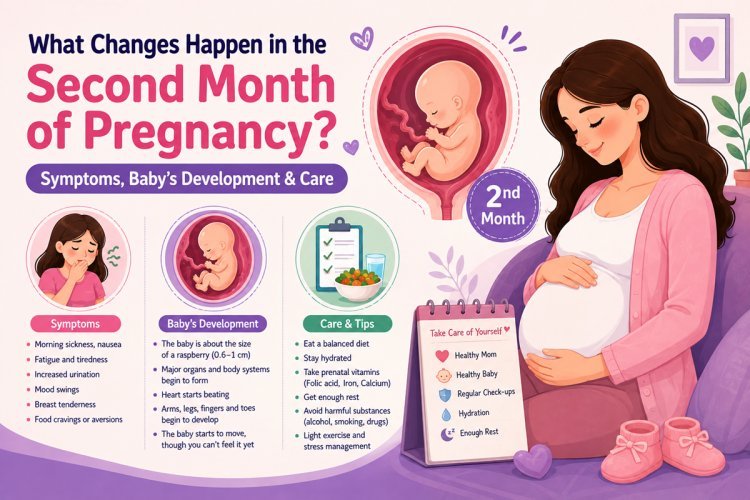
What Changes Happen in the Second Month of Pregnancy? Symptoms, Baby’s Development & Care
The second month of pregnancy is a period of rapid change. By this stage, many women begin to notice pregnancy symptoms more clearly, including nausea, tiredness, breast tenderness, frequent urination, bloating, and changes in taste or smell.
At the same time, the developing baby is going through important changes. The brain and spinal cord continue developing, the heart begins to develop, and the early structures of the arms, legs, face, and other organs start taking shape.
The second month generally covers weeks 5 through 8 of pregnancy. However, every pregnancy is different, and not everyone experiences the same symptoms.
In this article, we’ll discuss the second month of pregnancy symptoms, changes in the mother’s body, baby development, recommended foods, essential care tips, and warning signs that require medical attention.
What Does the Second Month of Pregnancy Mean?
The second month of pregnancy generally includes weeks 5, 6, 7, and 8.
Pregnancy is usually calculated from the first day of the last menstrual period. By the second month, fertilization and implantation have already taken place, and the embryo begins developing rapidly.
This is still part of the first trimester, which is an important period for early fetal development.
What Happens During Each Week of the Second Month?
Week 5: Early Pregnancy Changes Become More Noticeable
By week 5, many women begin to realize that they may be pregnant, especially if their period is late.
Common symptoms can include:
- Fatigue
- Breast tenderness
- Nausea
- Frequent urination
- Changes in taste and smell
- Food aversions
- Mood changes
During this week, important parts of the baby's nervous system begin developing. The brain and spinal cord start forming, while the early development of the heart also begins.
The embryo is still extremely small—around 2 millimeters, approximately the size of a sesame seed.
Week 6: Nausea and Fatigue May Increase
During week 6, pregnancy symptoms may become more noticeable.
Morning sickness can become stronger, although nausea can occur at any time of the day—not just in the morning.
The baby's development also continues rapidly. Early structures that will eventually form the brain, heart, arms, legs, ears, and other organs continue developing.
Some women may experience significant tiredness during this stage because of hormonal changes.
Week 7: Rapid Baby Development
By week 7, the embryo continues to grow quickly.
The brain and other important organs continue developing, while the early structures of the arms and legs become more defined.
The mother's symptoms may include:
- Nausea
- Vomiting
- Fatigue
- Breast tenderness
- Frequent urination
- Increased sensitivity to smells
- Food cravings or aversions
- Bloating
Week 8: The Baby's Structure Becomes More Defined
By week 8, the embryo has grown significantly compared with the previous weeks.
According to NHS pregnancy guidance, it may measure around 16 millimeters, approximately the size of a raspberry. The head begins becoming more upright, and the developing arms and legs become more noticeable. At around this stage, the developing embryo is generally referred to as a fetus.
The placenta also continues developing and will play an important role in providing oxygen and nutrients to the baby.
Common Symptoms During the Second Month of Pregnancy
Not every woman experiences the same symptoms. Some may experience several symptoms, while others may have very mild symptoms.
1. Nausea and Vomiting
Nausea is one of the most common second month pregnancy symptoms.
It is often called morning sickness, but nausea can happen at any time of the day or night.
Pregnancy-related nausea commonly begins around weeks 4 to 6, although the timing varies from person to person.
Eating small meals throughout the day, avoiding foods or smells that trigger nausea, getting enough rest, and staying hydrated may help.
If vomiting becomes severe and you cannot keep food or fluids down, contact a healthcare professional.
2. Extreme Tiredness
Feeling unusually tired is common during early pregnancy.
Hormonal changes can make you feel exhausted even after getting enough sleep.
Try to:
- Get enough sleep
- Take short breaks during the day
- Avoid unnecessary physical strain
- Eat nutritious meals
- Stay hydrated
Your body is going through significant changes, so it is important to listen to your body and rest when necessary.
3. Breast Tenderness
Hormonal changes can cause your breasts to become:
- Tender
- Sensitive
- Fuller
- Heavier
- Swollen
The nipples may also become more sensitive, and changes in their color may occur as pregnancy progresses.
4. Frequent Urination
You may notice that you need to urinate more often than usual.
Some women also need to wake up during the night to use the bathroom.
Frequent urination can occur during early pregnancy and may continue later in pregnancy.
5. Changes in Taste and Smell
Pregnancy can change the way certain foods and smells affect you.
You may suddenly dislike foods you previously enjoyed or become more sensitive to cooking smells.
Some women also experience a metallic taste in their mouth.
Food cravings and food aversions are also common during pregnancy.
6. Mood Changes
Hormonal changes can affect your emotions during the second month.
You may feel:
- Happy
- Excited
- Worried
- Irritable
- Emotional
- Anxious
Pregnancy itself can also bring concerns about childbirth, finances, relationships, and becoming a parent.
If anxiety or low mood becomes persistent or interferes with your daily life, speak with a healthcare professional.
7. Bloating and Constipation
Hormonal changes can affect digestion and may cause:
- Bloating
- Gas
- Constipation
- A feeling of fullness
Drinking enough water, eating fiber-rich foods, and staying appropriately active may help.
8. Increased Vaginal Discharge
Some women notice an increase in thin, milky-white vaginal discharge during pregnancy.
Normal pregnancy discharge should not usually have a strong unpleasant smell or cause significant itching or burning.
If you notice an unusual smell, itching, burning, pain, or an unusual change in discharge, contact a healthcare professional.
9. Mild Abdominal Cramping
Mild abdominal cramping can sometimes occur during early pregnancy.
However, severe, persistent, or worsening abdominal pain should not be ignored—especially if it occurs with vaginal bleeding, dizziness, or fainting.
What Changes Happen in the Mother’s Body During the Second Month?
Even though you may not look visibly pregnant yet, your body is already changing.
Possible changes include:
- Increased pregnancy hormones
- Breast tenderness
- Fatigue
- Nausea and vomiting
- Frequent urination
- Bloating
- Constipation
- Changes in appetite
- Increased sensitivity to smells
- Mood changes
- Increased vaginal discharge
Some women may experience many of these symptoms, while others may experience only one or two.
Having fewer symptoms does not necessarily mean that something is wrong.
Does Your Belly Get Bigger During the Second Month of Pregnancy?
Usually, the belly does not become noticeably larger during the second month.
The developing baby is still very small at this stage.
However, hormonal changes can cause bloating, which may make your abdomen feel fuller or slightly swollen.
If this is your first pregnancy, a visible pregnancy bump usually appears later.
Therefore, it is completely normal if you do not have a noticeable baby bump during the second month.
What Happens to the Baby During the Second Month?
The second month is a very important period of early baby development.
During this stage:
- The brain continues developing
- The spinal cord develops
- The heart begins developing
- Early arm and leg structures form
- Facial structures begin developing
- Ears begin developing
- Major organs begin their early development
- The placenta continues developing
The baby's development happens very quickly during these weeks.
At week 5, the embryo may be around 2 millimeters long. By week 8, it may reach around 16 millimeters.
These measurements are approximate and can vary depending on the exact gestational age.
How Big Is the Baby During the Second Month?
The baby's size changes rapidly during the second month.
| Pregnancy Week | Approximate Size |
|---|---|
| Week 5 | Around 2 mm — approximately the size of a sesame seed |
| Week 6 | Around the size of a baked bean |
| Week 7 | Continuing to grow rapidly |
| Week 8 | Around 16 mm — approximately the size of a raspberry |
These comparisons are only approximate. Your healthcare provider may use ultrasound measurements to assess development more accurately.
What Should You Do During the Second Month of Pregnancy?
The second month is a good time to establish healthy pregnancy habits.
1. Start or Continue Prenatal Care
Once pregnancy is confirmed, arrange appropriate prenatal care with a qualified healthcare professional.
Your doctor or maternity care provider can advise you about:
- Necessary tests
- Supplements
- Medical history
- Medications
- Ultrasound timing
- Nutrition
- Vaccinations
- Other pregnancy-related concerns
The timing of appointments can vary depending on your healthcare system and individual circumstances.
2. Take Folic Acid as Recommended
Folic acid is particularly important during early pregnancy because the baby's neural tube develops very early.
The CDC recommends that women who can become pregnant consume 400 micrograms (mcg) of folic acid daily to help prevent neural tube defects.
However, some women may need a different dose depending on their medical history.
Always follow your healthcare professional's advice regarding supplements.
3. Eat a Balanced Diet
A healthy diet is important during pregnancy.
Try to include:
- Vegetables
- Fruits
- Whole grains
- Lentils and beans
- Eggs
- Fish
- Well-cooked meat
- Safe dairy products
- Nuts and seeds
You do not need to "eat for two" during the second month.
Focus on the nutritional quality of your meals rather than simply increasing the amount of food.
4. Drink Enough Water
Nausea and vomiting can make it harder to stay hydrated.
Drink water regularly throughout the day.
If you are vomiting frequently and cannot keep fluids down, seek medical advice.
5. Get Enough Rest
Fatigue can be significant during early pregnancy.
Try to maintain a regular sleep routine and allow yourself enough time to rest.
Do not feel guilty about taking breaks when your body needs them.
6. Be Careful With Medicines
Do not start a new medicine, painkiller, herbal product, or supplement without discussing it with your doctor or pharmacist.
If you already take prescription medication, do not stop it suddenly without medical advice.
Tell your healthcare provider that you are pregnant or may be pregnant.
What Should You Eat During the Second Month of Pregnancy?
A balanced diet should provide a variety of essential nutrients.
Protein-rich foods
Consider:
- Eggs
- Fish
- Well-cooked meat
- Lentils
- Beans
- Chickpeas
Fruits and vegetables
Include a variety of fruits and vegetables to provide fiber, vitamins, and minerals.
Calcium-rich foods
Safe dairy products can provide calcium and other important nutrients.
Iron-rich foods
Meat, beans, lentils, leafy green vegetables, and other iron-containing foods can contribute to a healthy diet.
If your doctor recommends an iron or other supplement, take it according to their instructions.
What Foods Should You Avoid During the Second Month of Pregnancy?
Food safety is particularly important during pregnancy.
Be careful with:
- Alcohol
- Raw or undercooked meat
- Raw or undercooked eggs
- Unpasteurized dairy products
- Unwashed fruits and vegetables
- Unsafe or improperly stored foods
- Unregulated herbal products and supplements
Wash fruits and vegetables thoroughly and make sure meat and eggs are cooked properly.
If you are unsure whether a particular food or supplement is safe during pregnancy, consult your healthcare professional.
How Can You Reduce Nausea During the Second Month?
Nausea can make eating difficult during early pregnancy.
Some strategies that may help include:
- Eat small meals more frequently
- Avoid staying hungry for long periods
- Drink fluids regularly
- Get enough rest
- Keep a light snack nearby
- Avoid foods and smells that trigger nausea
- Try eating something dry before getting out of bed
Some people may find ginger helpful for pregnancy-related nausea.
However, if nausea or vomiting becomes severe, speak with a healthcare professional. Treatment may be available if lifestyle changes are not enough.
Is Abdominal Pain Normal During the Second Month?
Mild cramping can sometimes occur during early pregnancy.
However, you should seek medical advice if you experience:
- Severe abdominal pain
- Persistent pain
- Pain that is getting worse
- Strong pain on one side
- Abdominal pain with vaginal bleeding
- Severe dizziness
- Fainting
- Shoulder pain along with other concerning symptoms
These symptoms can sometimes indicate a pregnancy complication and should be assessed promptly.
When Should You See a Doctor During the Second Month?
Contact a healthcare professional promptly if you experience:
- Heavy vaginal bleeding
- Severe or persistent abdominal pain
- Severe dizziness
- Fainting
- Severe vomiting
- Inability to keep fluids down
- Fever
- Difficulty breathing
- Chest pain
- Severe or worsening headache
- Changes in vision
- Any symptom that feels serious or unusual
Do not wait for a routine appointment if you are experiencing a potentially serious symptom.
Emotional Health During the Second Month of Pregnancy
Pregnancy is not only a physical experience. It can also affect your emotional wellbeing.
During the second month, you may experience:
- Excitement
- Happiness
- Anxiety
- Fear
- Mood swings
- Worry about the baby's health
- Concerns about childbirth
- Financial worries
- Changes in relationships
Talking openly with your partner, family, friends, doctor, or another trusted person can help.
If you feel persistently anxious, depressed, overwhelmed, or unable to manage your normal activities, seek professional support.
Second Month of Pregnancy Care Checklist
Use this simple checklist to keep track of important habits:
- Start or continue prenatal care
- Discuss folic acid with your healthcare provider
- Eat a balanced diet
- Drink enough water
- Get adequate sleep and rest
- Avoid alcohol and smoking
- Avoid unsafe foods
- Do not take medicines without appropriate advice
- Monitor severe nausea or vomiting
- Pay attention to unusual bleeding or pain
- Discuss concerns with your healthcare provider
- Take care of your emotional wellbeing
Frequently Asked Questions About the Second Month of Pregnancy
How can I tell if I am in the second month of pregnancy?
Pregnancy is usually calculated from the first day of your last menstrual period. The second month generally covers weeks 5 through 8.
Common symptoms may include nausea, fatigue, breast tenderness, frequent urination, food aversions, and increased sensitivity to smells.
Does your belly get bigger during the second month?
Usually, there is no significant visible baby bump during the second month.
Bloating may make your stomach appear slightly larger, but the developing baby is still very small.
Can you feel the baby moving during the second month?
No. The baby is still too small for you to feel movement at this stage.
Fetal movement is normally felt much later in pregnancy.
Why do I feel nauseous during the second month of pregnancy?
Pregnancy-related hormonal changes are associated with nausea and vomiting. Symptoms often begin around weeks 4 to 6, although the timing and severity vary between women.
How big is the baby at two months pregnant?
By around week 8, the developing fetus may measure approximately 16 millimeters, or about the size of a raspberry.
Is mild abdominal pain normal during the second month?
Mild cramping can occur during early pregnancy. However, severe, persistent, or worsening pain—especially with bleeding—requires medical assessment.
When should I see a doctor during the second month?
You should arrange prenatal care after confirming pregnancy. Seek urgent medical advice if you experience heavy bleeding, severe abdominal pain, fainting, severe vomiting, difficulty breathing, chest pain, or another serious symptom.
What should I eat during the second month of pregnancy?
Focus on a balanced diet containing vegetables, fruits, whole grains, legumes, eggs, fish, properly cooked meat, and safe dairy products.
What should I avoid during the second month of pregnancy?
Avoid alcohol, raw or undercooked foods, unpasteurized dairy products, poorly washed produce, and unregulated supplements or herbal products.
Final Thoughts
The second month of pregnancy is a period of rapid development and significant changes.
Symptoms such as nausea, fatigue, breast tenderness, frequent urination, bloating, food aversions, and mood changes can become more noticeable during this stage. However, every pregnancy is different, and some women may experience only mild symptoms.
At the same time, the developing baby is undergoing important changes. The brain, spinal cord, heart, limbs, facial structures, and other organs begin developing rapidly during these early weeks.
Taking care of your nutrition, getting enough rest, taking recommended supplements such as folic acid, avoiding alcohol and smoking, and attending appropriate prenatal care can help support a healthy pregnancy.
Most importantly, do not ignore heavy bleeding, severe abdominal pain, severe vomiting, fainting, breathing difficulties, or other concerning symptoms.
This article is intended for general health information and does not replace personalized medical advice. Always consult a qualified healthcare professional for advice based on your individual pregnancy and medical history.